
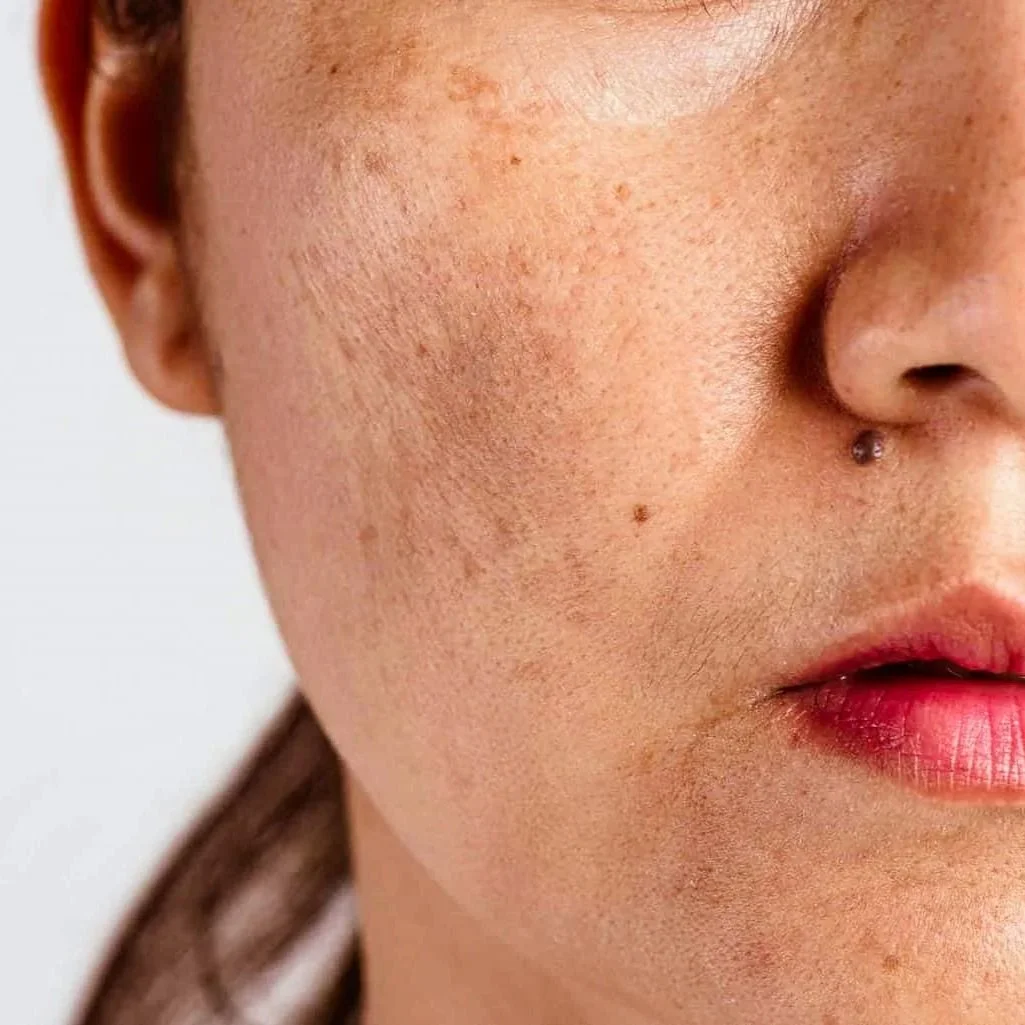
Melasma
Patchy, uneven pigmentation on the cheeks, forehead, upper lip, or jawline. The discoloration is often described as mask-like and tends to fluctuate with sun exposure, hormonal changes, or pregnancy. It can feel stubborn and resistant to standard skincare.
About this skin condition
How it affects daily life
Melasma can significantly affect confidence because it is highly visible and difficult to conceal. Patients often feel frustrated by its persistence despite diligent skincare, and it can make the complexion appear uneven or prematurely aged.
What is actually happening
Melasma is a medical skin condition influenced by hormonal, genetic, and environmental factors. It is chronic and recurrent in nature. Effective management requires clinical understanding of its triggers, not just cosmetic correction. Treatment focuses on control and long-term maintenance rather than permanent removal.
How we address it
At One Clinic MD, melasma is managed with a combination approach tailored to each patient's skin and history. Care may include medical-grade skincare to regulate melanin production and protect the skin barrier, carefully selected laser or energy-based therapies that target pigment without triggering further inflammation, and treatments that support overall skin health and reduce recurrence.

When to seek a consultation
We recommend a consultation when pigmentation is persistent, worsening, or does not respond to over-the-counter products. Early evaluation allows us to identify triggers, avoid treatments that may aggravate melasma, and establish a long-term management plan.